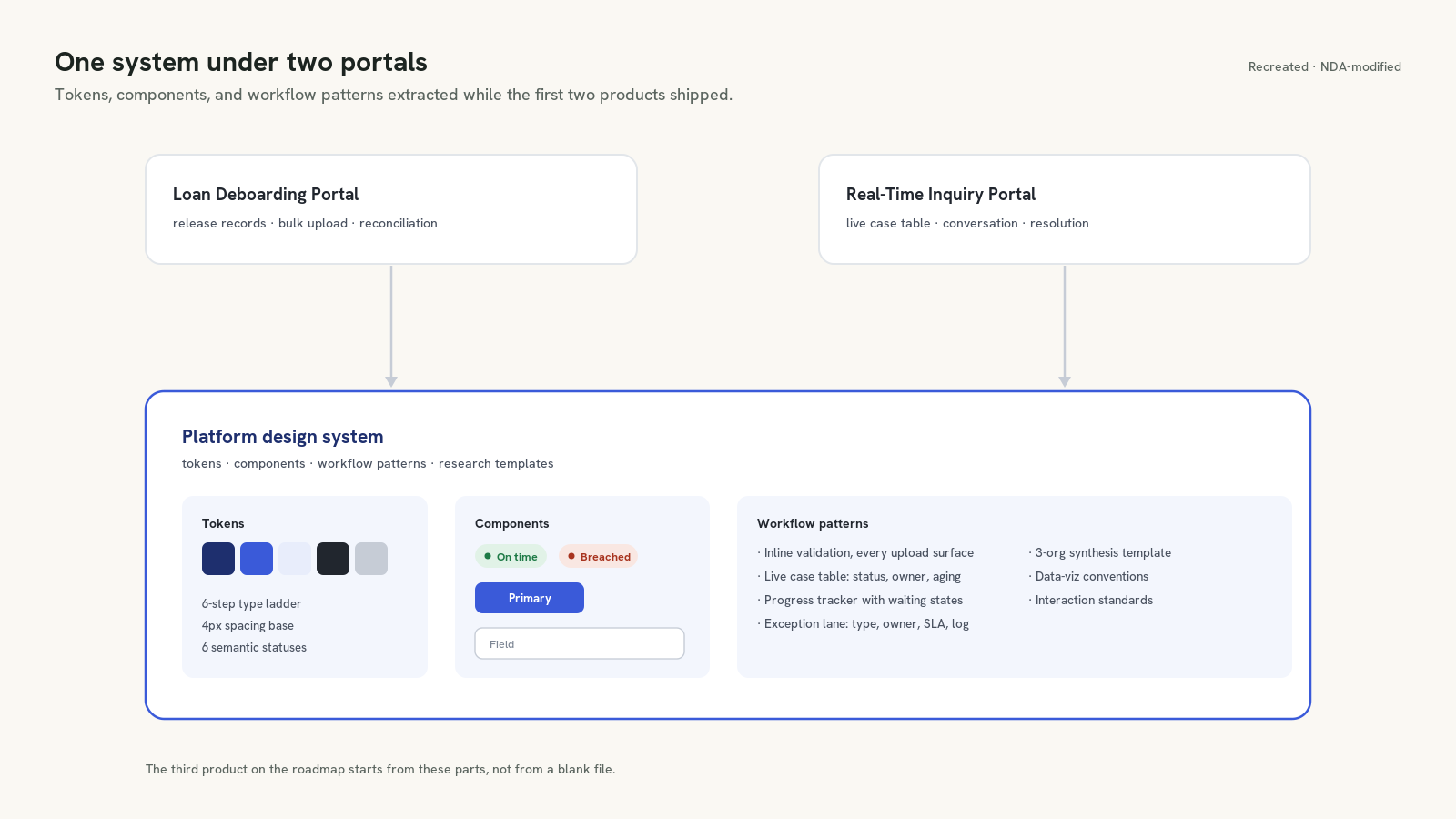
Tokens, components, and workflow patterns extracted mid-flight from the platform's first two portals, so every later surface starts from parts instead of a blank file. The case table, the progress tracker, the exception lane, and the inline-validation pattern all live here now.
Senior UX Designersystems owner, sole designer
Onity Grouptwo product squads consuming the system
Ongoingbuilt alongside both portals, 2025 to 2026
Figma · Variables · Librariestokens, components, and pattern documentation
I've modified the palette, names, and component details shown here to respect Onity Group's confidentiality. The sheets were recreated with AI assistance to convey the system's structure without exposing the actual product. The decisions and the reuse story are intact.
If you only read three paragraphs, read these. Problem, change, and results in about a minute.
Two portals were being designed at once on a platform with no shared parts. Every screen decision was being made twice, drift was already visible between early prototypes, and everything later on the roadmap would have inherited the mess.
I extracted the system from the products instead of designing it upfront. Tokens and a six-step type ladder first, then only the components and workflow patterns the portals proved they needed: the case table, the progress tracker, the exception lane, inline validation.
Both portals ship from the same parts. The four core patterns are documented and reused across the platform, every upload surface runs the inline-validation pattern, and the next two roadmap projects started from this work instead of from scratch.
A system designed before its products is a guess. This one was pulled out of two real portals mid-build, which meant every token and component had already survived contact with actual mortgage workflows.
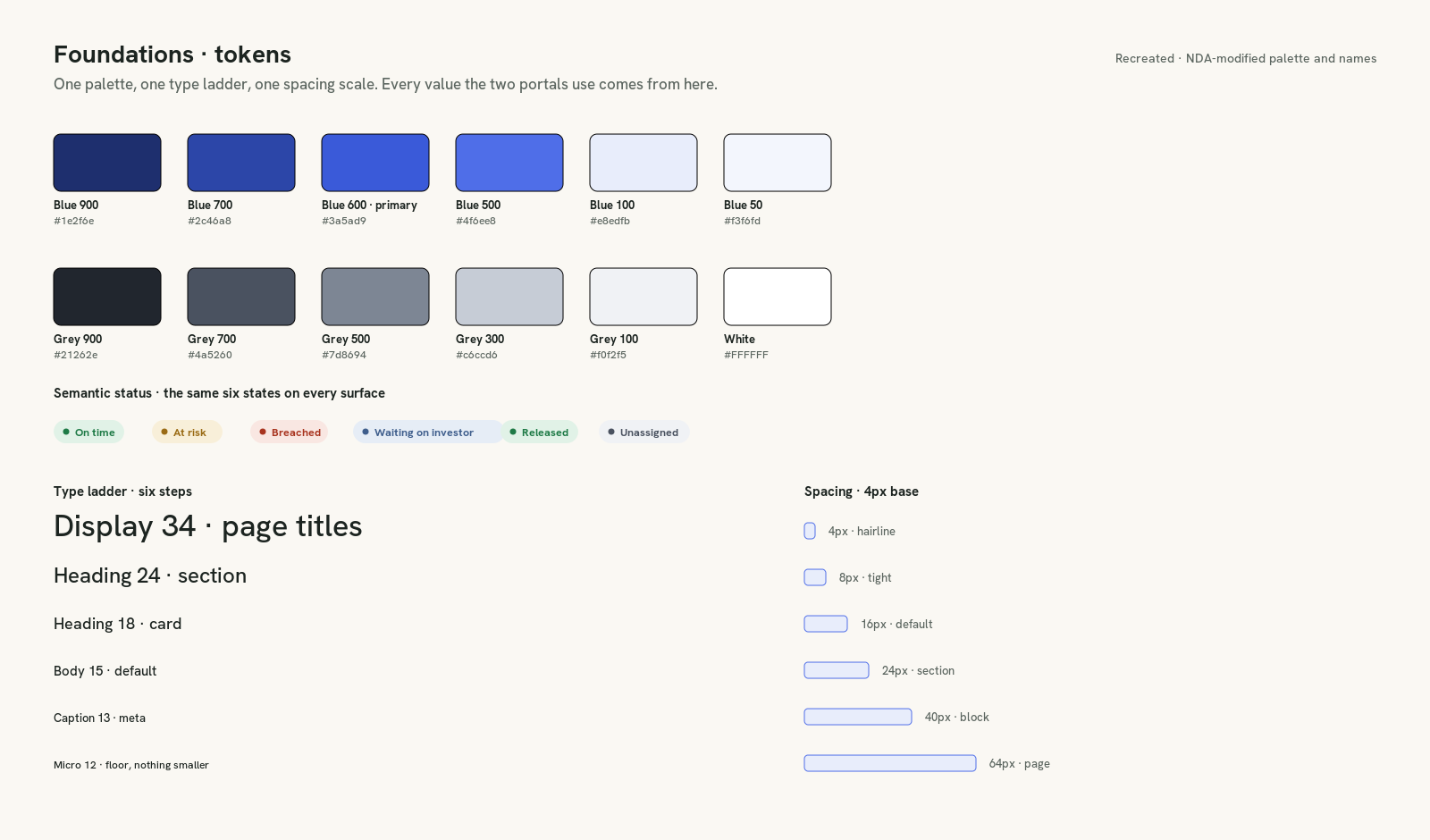
One palette, a six-step type ladder with a 12px floor, a 4px spacing base, and six semantic statuses. The statuses came straight from the portals: a release is on time, at risk, breached, waiting, released, or unassigned, on every surface, in the same colors.
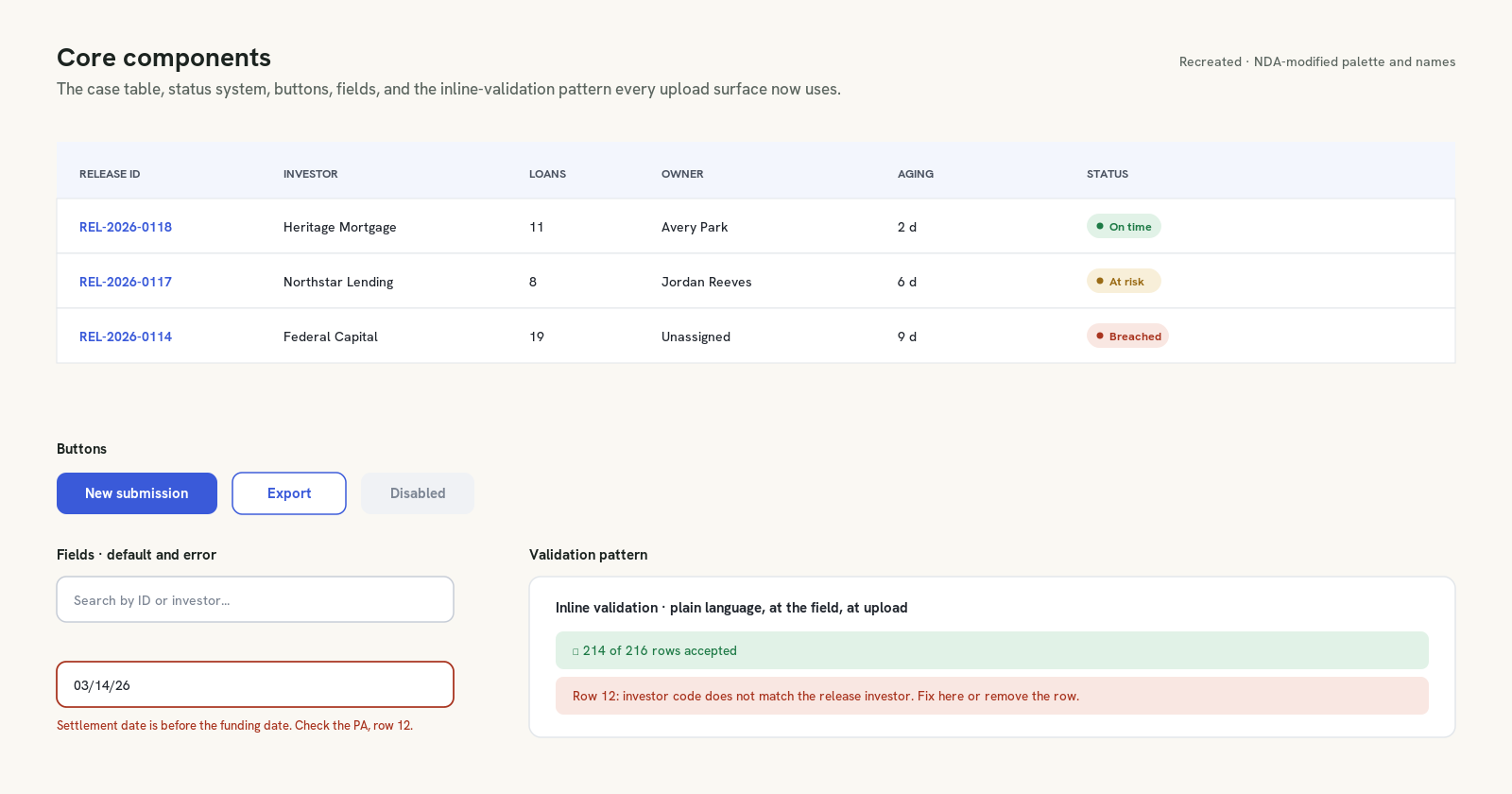
Nothing entered the library until a portal needed it twice. The case table, status chips, buttons, and fields all graduated from product screens, so the library never grew faster than the platform's real needs.
Components are table stakes. What the platform actually reuses is behavior: how progress reads, how exceptions get owned, how errors get caught at the door. These were designed once, argued over once, and consumed everywhere since.
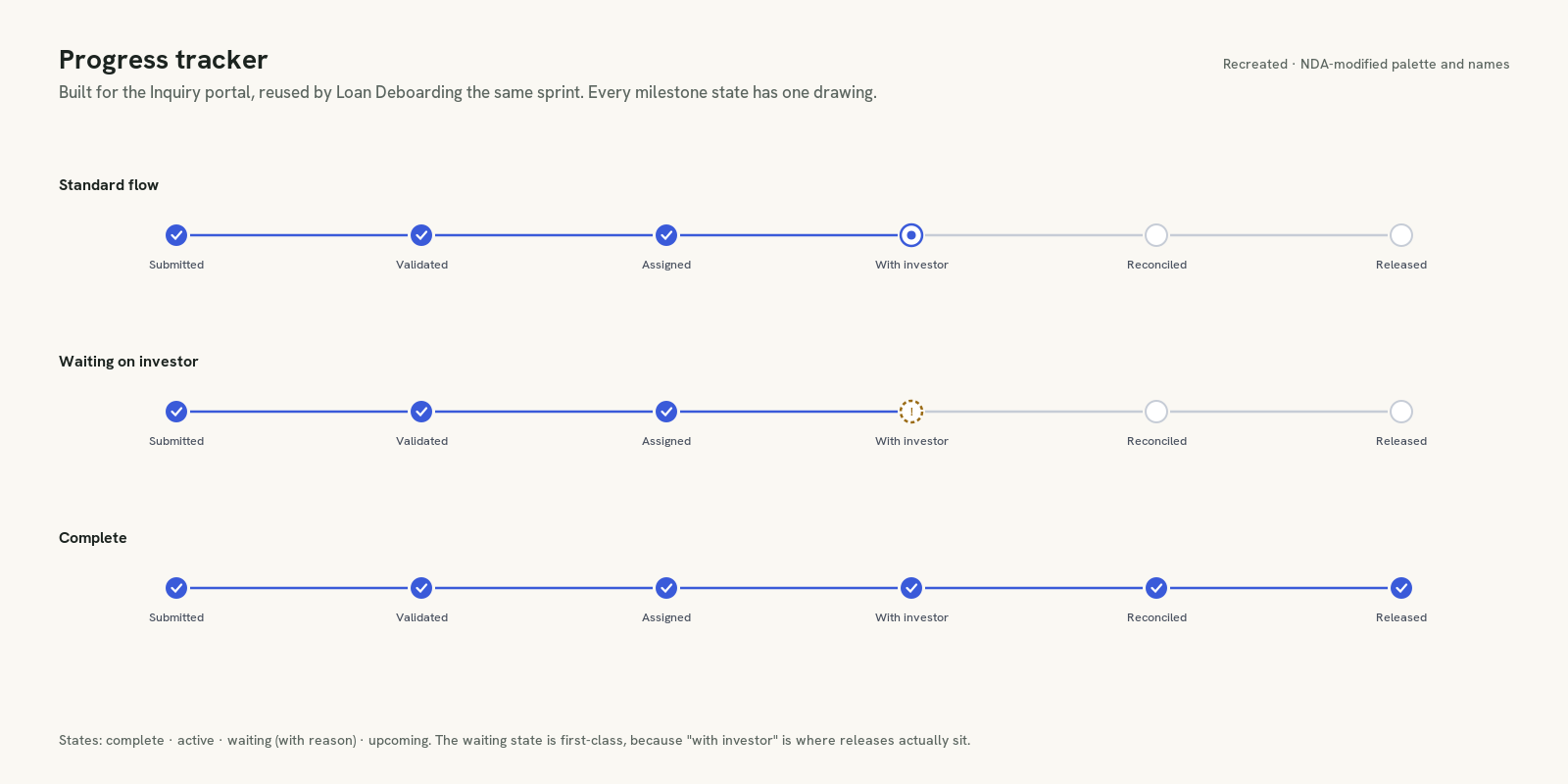
Built for the Inquiry portal, reused by Loan Deboarding the same sprint. The "waiting on investor" state gets its own drawing, because that is where releases actually sit, and hiding it is how status meetings get born.
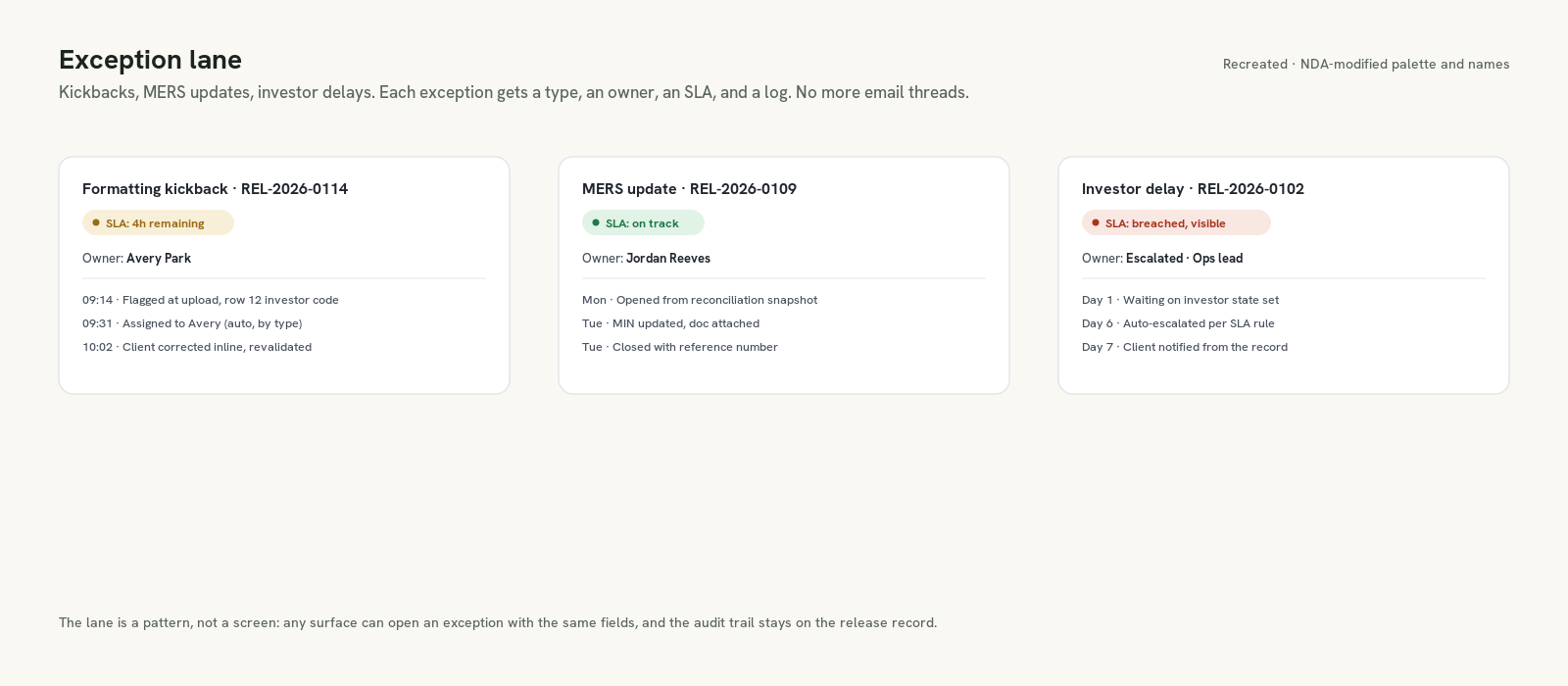
Kickbacks, MERS updates, and investor delays used to live in email threads. The lane gives every exception the same four fields on any surface, and the audit trail stays on the release record where accounting can find it.
A design system's only honest metric is whether people who are not its author build with it. The system is in active use; these are the reuse signals so far, stated plainly.
Loan Deboarding and Real-Time Inquiry ship from the same tokens, components, and patterns, with no visual drift between them.
The validation pattern from the Loan portal was adopted for every upload surface on the platform: plain-language errors, caught at the door.
The teams behind the next two platform projects pulled from this library and its research templates instead of starting over.
Two layers of impact that don't show up in a library file. What building it changed about how I work, and what it leaves behind for the platform.
The temptation was to spend a quarter on foundations before either portal drew a screen. Extracting mid-flight was messier, but it meant every pattern had already survived a real workflow before it was named. The system never had to guess what the platform needed; the portals told it.
The clearest sign it works: the parts get used by people who didn't build them. The patterns documented here became the starting point for the platform's next surfaces, and the research templates traveled with them.